
Behind the Scenes: A Day Inside a Professional Photography Studio in 2026
Wed Sep 2026

Category:
From the outside… a fully equipped professional photography studio can look deceptively simple. A large space, a few lights, cameras, backdrops, and people doing what they do best.
But the finished photograph rarely tells the full story.
Behind every well-executed campaign image, product photograph, portrait, or piece of social content is a carefully managed production. In 2026, that process has become even more demanding. Brands need more content, creators need greater flexibility, and a single shoot may need to produce stills, video, short-form clips, and assets for several platforms.
So, what actually happens during a shoot day?
Here is a look at the photography studio behind the scenes, from arriving and preparing the space to capturing the final frames.
08:00: The studio comes to life
A productive shoot starts well before the first photograph is taken.
The first stage is checking the space and preparing everything required for the day’s production. Equipment is positioned, batteries are checked, memory cards prepared and lighting equipment tested.
The physical environment matters too.
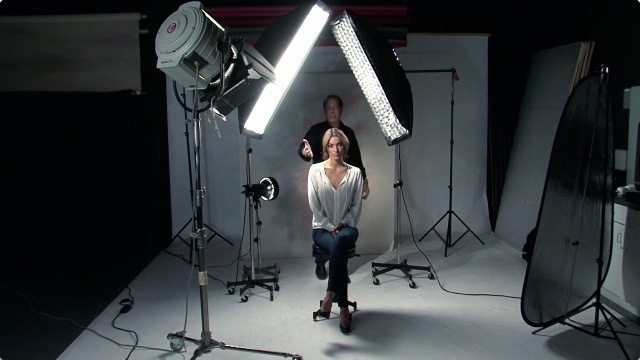
A professional production space needs to accommodate people, cameras, stands, lighting, props and products without everything becoming a trip hazard. There needs to be enough room to move around the subject and make adjustments quickly.
This is where an experienced studio environment makes a noticeable difference. Good preparation reduces interruptions later.
08:30: Building the production setup
Lighting is usually one of the first major decisions.
The setup depends entirely on what is being photographed or filmed. A corporate portrait may require a clean, controlled lighting arrangement. Product photography may need precise reflections and shadow control. A fashion shoot could require a more dramatic approach, while video production introduces additional considerations such as continuous lighting and audio.
There is no single “professional” lighting setup.
The objective is to create the right environment for the brief.
In a modern content studio, this flexibility is increasingly important because the same space may need to support several types of production during the week.
09:00: The first test shots
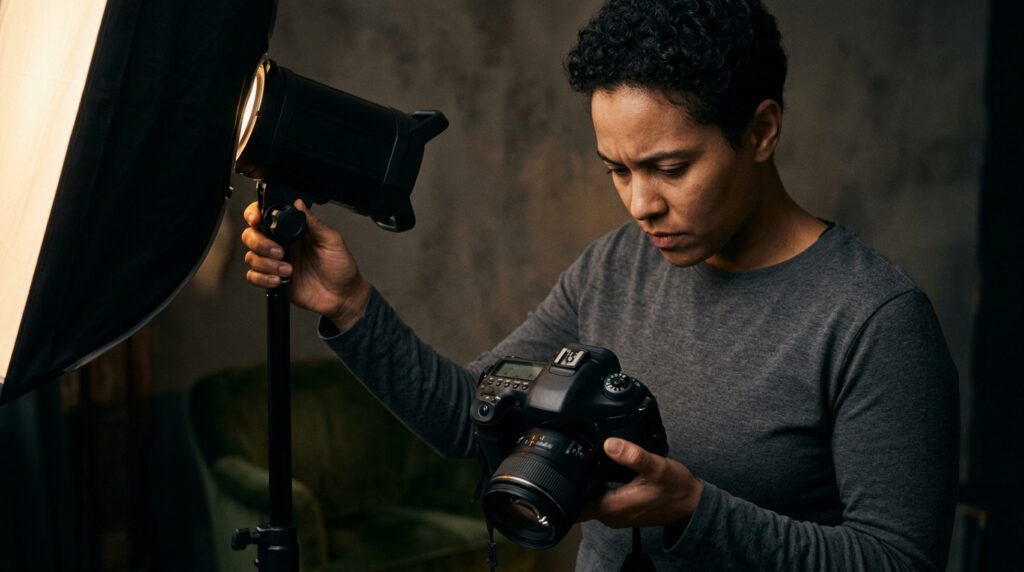
Before the main production begins, test photographs help establish whether everything is working as intended.
This is where small problems become obvious.
A light may need repositioning. A background may require adjustment. A product might need to be rotated slightly. Skin tones, reflections, exposure and composition can all be assessed before committing to the main sequence.
For brands, this stage can save considerable time.
It is much easier to correct a lighting or composition issue before dozens of products or multiple outfits have been photographed.
10:00: Production gets underway
Once the setup is established, the shoot becomes a combination of creativity and process.
The photographer is watching the subject, composition, lighting and technical settings while also thinking about the final purpose of the images.
A photograph destined for a website may need to work differently from one designed for an Instagram campaign. A brand campaign might require horizontal and vertical compositions. Short-form video may need additional framing to accommodate mobile screens.
This is one reason planning has become so important.
A good shoot day is not simply about taking attractive photographs. It is about producing useful visual assets that can actually work across the channels where a brand or creator needs them.
12:00: Reviewing and refining
Digital photography makes reviewing work almost instantaneous.
Images can be checked on a large monitor, allowing the team to assess sharpness, expression, composition and lighting.
For commercial work, this is particularly valuable.
A product may look perfect at first glance but reveal a distracting reflection when viewed at full resolution. A portrait may have an excellent expression but a small issue with positioning. Catching these details during production is considerably easier than discovering them during post-production.
The workflow therefore becomes cyclical:
Capture. Review. Adjust. Capture again.
That process is not a sign that something has gone wrong. It is part of producing consistent professional results.
13:00: The unexpected happens
No matter how carefully a production is planned, real shoots rarely run perfectly.
A product arrives late. A model needs a wardrobe change. Equipment requires adjustment. A creative idea develops halfway through the session.
This is where the practical experience of the photographer and production team becomes important.
A studio needs to provide enough flexibility to respond without bringing the entire schedule to a halt.
That might mean changing the lighting arrangement, moving furniture, creating a new background or adapting the shot list.
The ability to make those decisions quickly is one of the less visible parts of professional production.
15:00: Capturing additional content
One of the biggest changes in modern commercial photography is the demand for more than one type of asset.
A brand might arrive intending to create a series of photographs but realise that the same production can generate behind-the-scenes footage, vertical social clips, promotional videos and additional campaign material.
Creators face a similar challenge.
If the lighting, styling and production environment are already in place, there can be considerable value in capturing several pieces of content during the same session.
This is where an efficient content studio workflow becomes particularly useful.
Instead of treating every piece of content as a separate production, the team can plan the shoot around a collection of related assets.
16:30: Breaking down the set
When the final frame has been captured, the production is not quite finished.
Equipment needs to be safely packed away, products checked, props returned and the space restored.
Files also need to be secured and organised.
Professional photography involves considerably more data management than simply pressing the shutter. Images may need to be backed up, selected, edited, retouched and prepared in different formats depending on where they will eventually be used.
The final image is therefore the result of a much longer process than the few seconds it takes to capture it.
What makes a professional studio different?
The biggest difference is not necessarily the camera.
It is the combination of space, equipment, preparation, workflow, and experience.
A suitable studio allows photographers and production teams to concentrate on creating rather than constantly working around limitations.
For creators, that might mean having enough space for lighting, cameras and multiple setups. For brands, it could mean producing a consistent collection of images efficiently. For agencies, flexibility can be critical when several deliverables need to be produced during one booking.
A well-designed studio becomes part of the production rather than simply being the room where it happens.
The real value of seeing it for yourself
Photographs of a studio can only tell you so much.
Walking through the space gives you a much better understanding of how the environment can work for your particular production. You can see the available space, discuss equipment requirements, consider different setups and work out how the shoot could be structured.
At dlphoto, the studio has been used for photography, video and content production for many different requirements. That practical experience shapes how the space is approached.
If you are considering a production and want to understand what is possible, you can explore the studio and its facilities or arrange a studio tour.
You can also use YouTube to explore examples of modern production techniques, lighting approaches and behind-the-scenes content.
Want to see how the space could work for your next project? Book a studio visit and see the production environment for yourself.
Q&A: Professional Photography Studio Behind the Scenes
What happens during a typical studio shoot?
A typical production involves preparation, equipment setup, lighting tests, shooting, image review and adjustments. Depending on the project, it can also include styling, video capture, product preparation and additional social media content.
How long does a professional shoot take?
There is no standard duration. A simple portrait session may take considerably less time than a commercial product or campaign production. The number of subjects, required images, lighting changes and level of styling all influence the schedule.
Why is lighting tested before the main shoot?
Testing allows the photographer to identify problems with exposure, shadows, reflections, colour and positioning before the main sequence begins. This helps maintain consistency and reduces unnecessary reshoots.
Can one studio session produce both photographs and video?
Yes. With appropriate planning and equipment, the same production can generate still photography, video, behind-the-scenes footage and short-form social content. Planning these requirements in advance makes the process more efficient.
What should a brand prepare before a shoot?
A clear brief, shot list, products or subjects, brand guidelines and an understanding of where the final assets will be used are useful starting points. Having these decisions made beforehand allows more time to focus on the creative production itself.
Why does the studio environment matter?
Space affects how equipment can be positioned, how people move around the set and how many different setups can be created. A flexible environment can make it easier to adapt when the creative direction changes during production.
What happens to the photographs after the shoot?
The files are normally backed up before selection and post-production. Depending on the project, images may then be colour corrected, retouched, cropped and exported in formats appropriate for websites, social platforms, advertising or print.
What should I look for when choosing a studio?
Consider the size and layout of the space, available equipment, lighting options, accessibility, parking, power, working areas and whether the studio can accommodate the type of production you intend to create. The experience and support available can be just as important as the physical space.
The Big Picture
The most interesting part of a professional shoot in a pro studio is often what never appears in the finished photograph.
The positioning of a light. The test frame. The adjustment to a product. The discussion about composition. The decision to change direction halfway through a session.