
Essential Gear for Your First Podcast
Tue Jan 2026

Category:
Starting your first podcast is exciting, but it can also feel overwhelming. With endless gear lists online, influencers promoting complex home studios, and contradictory advice across platforms, many beginners struggle to separate what is genuinely essential from what is merely optional or aspirational. It is easy to assume that professional podcasts succeed because of expensive equipment alone, when in reality the defining factors are far more practical.
Professional podcast locations are built on consistency, clear audio, and a repeatable workflow that allows the host to focus on conversation rather than technology. Listeners may forgive basic visuals or simple branding, but they quickly disengage when audio is inconsistent, distracting, or difficult to listen to for extended periods. This is why understanding podcast equipment from a functional perspective is more valuable than chasing the latest trends.
This article breaks down the essential gear for your first podcast while also explaining what a professional studio provides beyond the equipment itself. Whether you are a solo creator, a business owner using podcasting as a marketing tool, or planning a multi-host or interview-based show, this guide will help you make informed decisions that balance quality, budget, and long-term growth.
The Foundation: Understanding Podcast Equipment Basics
At its core, podcasting relies on four technical pillars that work together to capture, shape, and deliver your voice to an audience:
- Microphone – Captures your voice clearly and consistently
- Audio interface or mixer – Converts sound into a usable digital signal
- Headphones – Allows real-time monitoring and quality control
- Recording and editing software – Manages capture, editing, and export
While each category can become highly technical, especially at a professional level, your first podcast setup should prioritise clarity, reliability, and ease of use over excessive features. A simple, well-configured setup will always outperform an advanced system that is poorly understood.
It is also important to remember that podcast equipment functions as a system. A high-end microphone paired with poor gain staging or a noisy recording environment will not deliver professional results. This systems-based understanding is one of the main advantages of recording in a studio environment, where each component is designed to work together predictably.
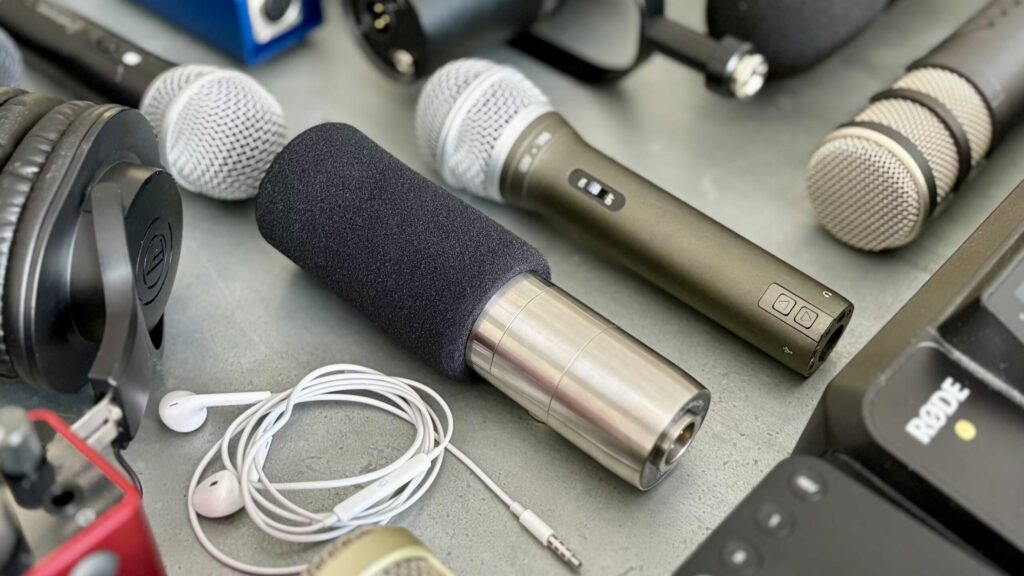
Microphones: Your Most Important Investment
If there is one place not to compromise, it is the microphone. A good microphone immediately elevates perceived professionalism and listener trust. In podcasting, your voice is the product, and the microphone determines how natural, warm, and intelligible that voice sounds to your audience.
Dynamic vs Condenser Microphones
For beginners, dynamic microphones are strongly recommended. The strengths are:
- Less sensitive to background noise
- More forgiving in untreated rooms
- Ideal for spoken-word content
Dynamic microphones focus primarily on the sound directly in front of them, which makes them well suited to home environments where acoustic treatment may be limited.
A condenser microphone can sound excellent, but it requires acoustic treatment and a controlled environment to avoid capturing room echo, traffic noise, air conditioning, or computer fans. Without these controls, condensers often create recordings that sound thin, harsh, or amateur.
Industry Benchmark: Rode Podcast Microphone
The Rode podcast mic has become an industry-standard microphone for podcasting, radio, and voice-over work. Its strengths include:
- Warm, broadcast-quality sound
- Excellent off-axis noise rejection
- Durable, professional build
While the this mic requires a quality preamp or proper gain staging (often achieved through a mixer such as a Rodecaster pro 2), it represents the sound many listeners now associate with premium podcasts. Its consistent performance across different voices is one reason it is widely used in professional studios.
For beginners not ready to invest at that level, there are more affordable dynamic microphones that still deliver clean, intelligible results when paired with the right setup and recording environment.
Audio Interfaces and Mixers: Where Control Lives
Your microphone needs a bridge between your voice and your computer or recording system. This is where audio interfaces and mixers play a critical role. They determine how clean your signal is, how much control you have over levels, and how flexible your setup can become over time.
USB Interfaces
A basic USB interface is suitable for solo podcasters and simple interview formats. It allows you to:
- Connect one or two microphones
- Control input levels
- Record directly into your software
USB interfaces are cost-effective and relatively easy to use, making them a popular entry point. However, they often lack advanced routing, onboard processing, and multi-channel flexibility, which can become limiting as your podcast grows.
All-in-One Podcast Mixers: Rodecaster pro 2
Devices like the Rodecaster pro 2 is designed specifically for podcasting and has become a favourite in professional studios. Key advantages include:
- Multiple microphone inputs for hosts and guests
- Built-in preamps optimised for dynamic microphones
- Onboard EQ, compression, and noise control
- Simple recording without requiring a computer
- Easy mixing of remote guests, music, and sound effects
For beginners who want a scalable setup, a Rode caster-style mixer reduces technical friction and supports growth from day one, while also delivering a more polished and consistent sound.
Headphones: Monitoring Without Guesswork
Monitoring your audio while recording prevents costly mistakes. Closed-back headphones are essential because they:
- Prevent sound leakage into microphones
- Reveal distortion, clipping, or background noise
- Help maintain consistent mic technique
Studio-grade headphones do not need to be expensive, but they must be accurate and comfortable for long sessions.
Recording and Editing Software
Your software choice should support a smooth workflow rather than slow you down.
Popular options include:
- Entry-level digital audio workstations for simple editing
- Professional DAWs for advanced post-production
- Recording software integrated with podcast mixers
At a professional level, engineers focus less on the software brand and more on signal quality, file management, and consistent output settings.
Acoustic Treatment: The Hidden Difference
Even the best microphone cannot fix a bad room. This is where many first-time podcasters struggle, often without realising the cause of their audio problems.
Common issues include:
- Echo and reverb caused by hard walls and ceilings
- Background noise from traffic, appliances, or air conditioning
- Inconsistent sound caused by changing mic positions or room layouts
Basic acoustic treatment, such as soft furnishings or portable panels, can help improve recordings at home. However, professional studios are designed from the ground up to control reflections, isolate external noise, and deliver repeatable results. This controlled environment is one of the most significant contributors to a professional podcast sound.
What Gear Is Required for Setting Up A Professional Studio
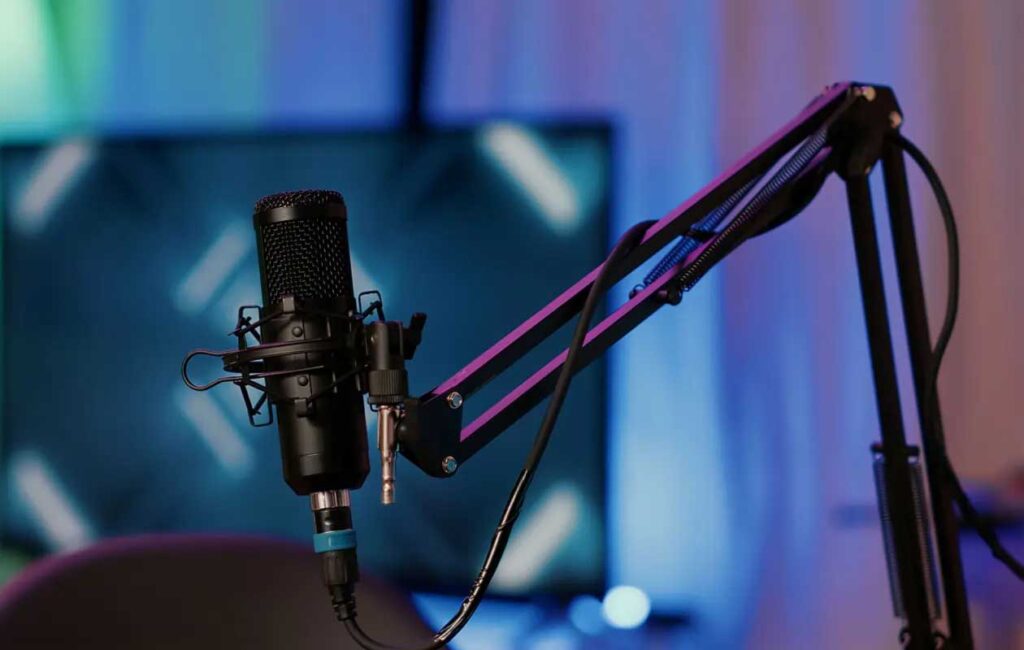
A professional podcast studio typically includes a carefully selected combination of gear and environment. Here is a realistic “What’s in the Bag” snapshot:
- Broadcast-grade dynamic microphones (e.g. Rode podcaster microphones)
- Professional microphone arms and shock mounts
- Podcast-focused mixers such as a Rodecaster 2
- Closed-back monitoring headphones for each guest
- Acoustically treated, sound-controlled rooms
- Redundant recording systems for safety
- Engineer-led gain staging and mix control
This setup ensures consistent sound quality regardless of who is speaking, how many people are recording, or whether the session is live or pre-recorded.
Why a Professional Studio Changes the Game
Beyond equipment, a professional podcast facility provides advantages that are difficult to replicate at home:
- Controlled acoustics – No echo, no distractions
- Technical oversight – Levels, mix, and recording handled for you
- Time efficiency – Focus on content, not troubleshooting
- Consistency – Every episode matches your brand sound
- Credibility – Clients, guests, and listeners perceive authority
For businesses, educators, and content creators, these factors directly impact audience retention and brand trust.
Home Setup vs Studio Recording: A Practical Comparison
| Aspect | Home Setup | Professional Studio |
|---|---|---|
| Audio quality | Variable | Consistent, broadcast-grade |
| Setup time | High | Minimal |
| Technical risk | Medium–High | Low |
| Scalability | Limited | Built-in |
| Listener perception | Casual | Professional |
For many creators, recording key episodes or entire seasons in a studio delivers better results with less stress.
Choosing the Right Path for Your First Podcast
If your goal is experimentation or learning the basics, a simple home setup is a reasonable starting point. It allows you to develop confidence, refine your format, and understand your audience without significant upfront investment.
If your goal is authority, monetisation, or brand growth, professional support accelerates success. Businesses, educators, and thought leaders benefit from consistent, high-quality audio that reflects credibility and professionalism from the first episode.
Many podcasters adopt a hybrid model: learning and testing ideas at home while recording flagship episodes, interviews, or full seasons in a studio environment. This approach combines flexibility with quality and allows creators to scale without compromising standards.
Key Takeaways: Gear Supports Content, Not the Other Way Around
Great podcasting is built on clarity, consistency, and confidence. The right podcast equipment removes friction and allows your voice to lead.
Whether you invest in your own setup or work within a professional podcast studio, understanding the role of each piece of gear empowers you to make smart, future-proof decisions.
Your first podcast does not need everything, it needs the right things, used well, in the right environment.