
How a Content Production Studio Creates Monthly Content in One Day
Thu Sep 2026

Category:
Creating enough content to stay visible online can feel like a full-time job.
There is the planning, scripting, filming, photography, lighting, editing, captions, formatting and publishing. Then, just when you have finished one piece of content, it is time to start thinking about the next.
But what if you could create much of your next month’s content in a single, well-organised production day?
That is the principle behind content batching. Instead of creating individual posts whenever inspiration strikes, brands plan a collection of content in advance and produce it efficiently within one dedicated session.
A professional content batching studio can make this approach considerably easier by combining the space, equipment, lighting and production workflow needed to capture multiple pieces of content without repeatedly starting from scratch.
The result is not simply more content. It is a more efficient way of producing it.
What is content batching?
Content batching means grouping similar creative tasks together and completing them during a defined production period.
Rather than filming one video today, another next week and taking product photographs whenever there is time, a brand might plan four weeks of content and capture it all during one production session.
For example, one day’s shoot could produce:
- Short-form videos for social media
- Product photographs
- Talking-head videos
- Behind-the-scenes footage
- Educational clips
- Brand portraits
- Promotional content
- Vertical video for TikTok and Instagram
- Supporting images for website and email marketing
The exact output depends on the brand, but the principle remains the same: plan once, produce efficiently and repurpose intelligently.
Why does batching work so well?
The biggest advantage is that you remove repeated setup time.
Lighting has to be positioned. Cameras need to be prepared. Backgrounds need to be arranged. Products have to be unpacked. People need to get camera-ready.
Doing this once for a planned collection of marketing assets is far more efficient than repeating the same preparation every few days.
There is also a mental benefit.
When the team knows that Tuesday is the monthly production day, everyone arrives with a clear brief. Scripts are prepared, products are available, outfits are selected and the required creative assets has already been mapped out.
The camera is no longer waiting for an idea.
The idea is waiting for the camera.
What does a one-day content production workflow look like?
A productive content day does not mean standing in front of a camera for eight hours and hoping enough usable material comes out of it.
The efficiency comes from the planning that happens beforehand.
1. Start with the content strategy
Before booking a Content studio in Cape Town, establish what the dedicated content space needs to achieve.
Are you trying to educate potential customers? Build trust? Demonstrate products? Introduce the people behind the business? Generate enquiries? Establish authority in your industry?
These objectives determine what should actually be filmed.
A simple monthly content marketing plan might contain four categories:
Educate:
Answer common customer questions and explain useful concepts.
Demonstrate:
Show products, processes, services or expertise in action.
Connect:
Introduce the people and personality behind the brand.
Convert:
Create content that explains an offer, service or next step.
This gives the production day a purpose rather than simply generating a large quantity of random footage.
2. Build a shot list
Once the visual themes are established, create a practical shot list.
This could include 20 short videos, several photographs, product demonstrations, different introductions and additional footage that can be used as supporting material.
Importantly, one recording does not necessarily equal one piece of content.
A five-minute conversation about a subject might produce several short clips. A product demonstration could become a tutorial, a social media Reel and supporting website material.
This is where content repurposing becomes extremely valuable.
3. Prepare the production environment
On the day, the studio should be ready before filming begins.
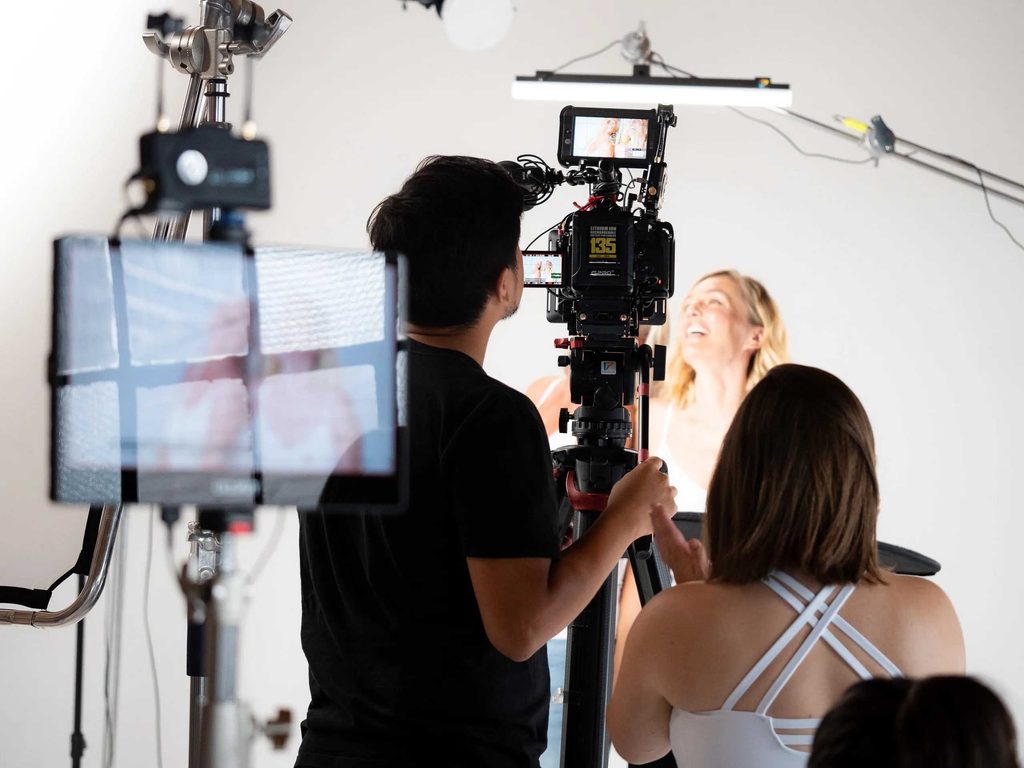
A professional setup can include appropriate lighting, cameras, backgrounds, microphones and other production equipment.
The objective is to minimise interruptions.
If the brand is recording talking-head videos, for example, the lighting and camera position can remain consistent while different topics are captured.
If products are involved, the team can move through the shot list systematically rather than repeatedly rebuilding the set.
A dedicated content production studio can make this process significantly easier because the environment is designed around production rather than having to convert an office or meeting room every time content is required.
4. Batch similar content together
This is one of the simplest ways to save time.
Film all the talking-head videos together. Photograph all the products together. Capture all the demonstrations together.
If someone needs to change clothing, group the shots around that outfit together.
If the background needs changing, complete everything requiring that background before moving on.
This is essentially an assembly-line approach to creative production, but with enough flexibility to keep the branded content looking natural.
5. Capture extra footage
A common mistake is to record only what has been planned.
A good production day should also create useful supporting material.
Think close-ups, hands working, products being handled, people walking into the space, equipment being adjusted, reactions, environmental shots and behind-the-scenes moments.
These clips can become valuable B-roll later.
That means a single production session can continue generating useful assets long after the cameras have been packed away.
How much monthly content can you create in one day?
There is no universal number because bulk content creation capacity depends on the complexity of the content.
A simple talking-head setup might allow a team to record a substantial number of short videos in a day. Product demonstrations, multiple locations, costume changes, complex lighting or detailed photography will naturally reduce the number of finished assets.
The important metric is not how many videos you can squeeze into a day.
It is how many usable pieces of content the production generates.
For example, one well-planned shoot might generate:
20 short-form videos
- 30 supporting photographs
- multiple B-roll clips
- behind-the-scenes footage
- several longer-form recordings
Those campaign assets can then be edited, resized and distributed across different channels throughout the month.
The production day becomes the engine. Publishing happens afterwards.
The role of a content production studio
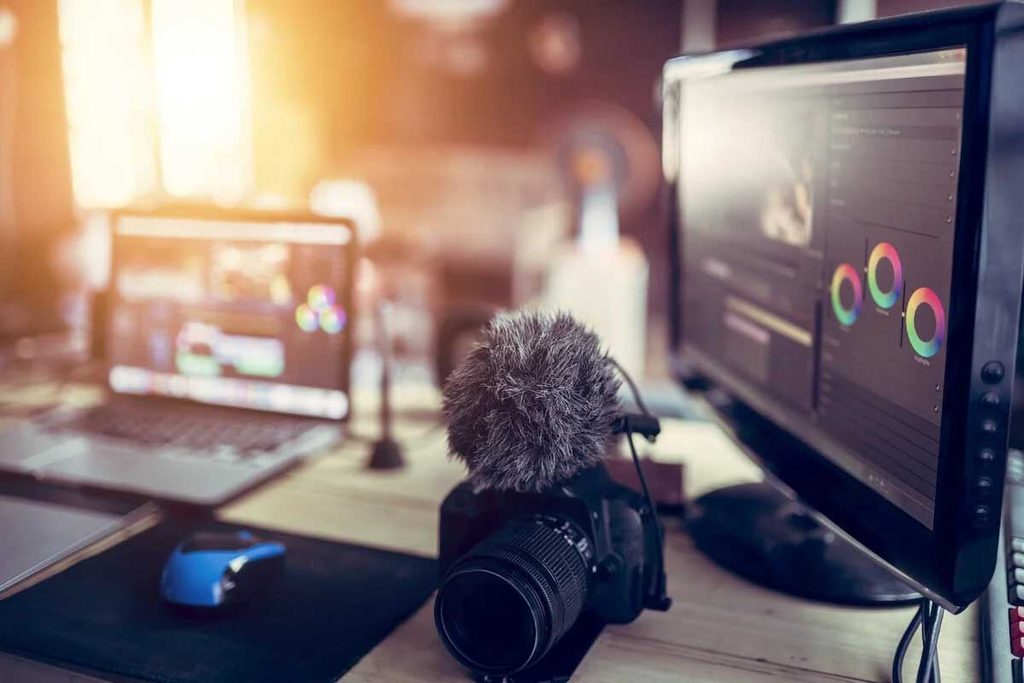
A purpose-built production environment can remove many of the practical obstacles brands encounter when creating regular content.
Instead of worrying about whether the office looks presentable, whether there is enough natural light or how to record clean audio, the team can concentrate on the message.
A professional environment also gives brands greater control over visual consistency.
That matters.
If your audience sees your creative library repeatedly, consistent lighting, framing and overall presentation help create a recognisable visual identity.
The objective is not to make every video look identical. It is to make the content feel as though it belongs to the same brand.
One shoot, multiple platforms
Modern social assets rarely lives on one platform.
A single production session can be planned to generate assets for TikTok, Instagram, LinkedIn, YouTube, websites, newsletters and other marketing channels.
A vertical video might become a TikTok and Instagram Reel.
A longer explanation could be edited into several shorter clips.
A product demonstration can become a social post, website asset and sales-support material.
A behind-the-scenes photograph can accompany an article or LinkedIn update.
This is why monthly content creation should not be viewed as simply producing a month’s worth of individual posts.
It is about building a library of adaptable brand assets.
Why preparation matters more than the shoot itself
The most productive content days are usually won before anyone switches on a camera.
Scripts, talking points, products, props, outfits, branding elements and shot lists should be prepared in advance.
It is also worth identifying which content requires the most energy from the presenter.
Record the more demanding pieces when everyone is fresh. Leave simpler material, photographs and supporting footage for later.
A good workflow protects creative energy as well as production time.
Is batching suitable for every brand?
Not necessarily.
Some content benefits from being spontaneous, reactive or closely tied to current events. Businesses that rely heavily on news, trends or daily developments may still need regular individual shoots.
However, even these brands can batch evergreen material.
Educational videos, frequently asked questions, product demonstrations, staff introductions and brand stories do not necessarily need to be created at the last minute.
The most effective approach is often a combination of planned and reactive content.
Batch what can be planned. Leave room for what cannot.
The real advantage: consistency
The biggest benefit of batching is not simply saving a few hours.
It is creating a repeatable production system.
Once a business knows what it wants to communicate, how it wants to look and how much content it needs each month, the process becomes easier to repeat.
Planning becomes faster.
One-day production becomes more organised.
The team knows what to expect.
And instead of asking, “What should we post today?”, you have a library of brand assets ready to be edited and published.
That changes content from an ongoing scramble into a manageable business process.
Turn one production day into a month’s content
The idea behind a successful bulk content creation workflow is simple:
Plan the month. Prepare the assets. Produce efficiently. Repurpose intelligently. Publish consistently.
A professional studio can provide the environment and production infrastructure, but the real value comes from having a system behind the camera.
When strategy and planned production work together, one focused day can create enough material to keep a brand visible for weeks.
If you are considering a dedicated monthly content day, enquire about the studio and discuss what you would like to produce. The right setup can then be planned around your content rather than trying to force your content into an unsuitable environment.
Frequently Asked Questions
What is a content batching studio?
A content batching studio is a professional production space where brands can create multiple pieces of marketing content during one planned session. It typically provides controlled lighting, cameras, backgrounds and other production facilities needed to produce a range of visual assets efficiently.
How can I create a month’s worth of content in one day?
Start by planning your content themes and required assets before the shoot. Group similar videos and photographs together, prepare scripts and props in advance, and capture additional B-roll. The resulting footage can then be edited and repurposed into content for different platforms throughout the month.
How many videos can a brand film in one day?
There is no fixed number. A simple talking-head production can produce considerably more short videos than a shoot involving products, multiple setups or complex demonstrations. The priority should be producing useful, high-quality assets rather than maximising the number of recordings.
Is content batching suitable for small businesses?
Yes. Batching can be particularly useful for smaller businesses because it reduces the need to repeatedly stop normal operations to create marketing material. A planned production session can create a bank of content that can be published gradually.
Can one video be used on multiple platforms?
Yes, provided the content is suitable for each platform. A core recording can often be edited into shorter clips, resized for different formats and adapted for different audiences. The message may remain consistent while the presentation changes.
What should I prepare before a monthly content shoot?
Prepare your content topics, scripts or talking points, products, props, clothing changes, branding materials and a shot list. It is also useful to identify which content is a priority and which additional footage could be captured if time allows.
Does batching make content less authentic?
It does not have to. Planning the production does not mean making the content artificial. Presenters can still speak naturally and create personality-driven material. The advantage is simply that the production process is organised rather than improvised.
What equipment is needed for a content production day?
The requirements depend on the content, but a professional setup may include cameras, appropriate lighting, microphones, backgrounds, stands and monitoring equipment. The exact equipment should be selected around the type of content being produced rather than using the same setup for every project.
How often should a brand have a content production day?
For many businesses, a monthly session is a practical starting point because it creates a regular production rhythm without requiring constant filming. Brands with higher content demands may benefit from fortnightly sessions, while others may find that quarterly production days are sufficient.
Lesson Learned
You do not necessarily need to create content every day.
You need a repeatable system for creating the right content efficiently.
With proper planning, a well-equipped production environment and a clear workflow, one focused shoot can provide a substantial library of material for the weeks ahead.
That means less time scrambling for ideas and more time using content to actually grow your brand.