
How Businesses Use Professional Photography to Strengthen Their Brand
Fri Sep 2026

Category:
A customer may encounter your business before they ever speak to someone in your team.
They might see your website, LinkedIn profile, social media feed, company brochure, online shop or an image attached to a press release. Within seconds, they are forming an impression of who you are, what you do and whether your business appears credible.
That is why photography is more than decoration.
For businesses, carefully planned imagery can become a practical part of brand communication. It can help establish a consistent visual identity, introduce the people behind the company, explain what a business offers and make marketing material feel considerably more authentic.
Professional photography is particularly valuable for SMEs and growing brands because visual communication often has to work harder when budgets, teams and marketing resources are limited.
Your brand is seen before it is understood
Think about the companies you recognise instantly. Often, you can identify them through a combination of colour, design, typography and imagery before reading the accompanying words.
Photography plays an important role in that visual system, as consistent imagery can help establish a recognisable style across a website, social platforms, advertising and printed material. It can communicate whether a company is established, approachable, innovative, premium, practical or creative.
That does not mean every business needs elaborate advertising campaigns.
The key question is whether the captured content accurately reflects the business and conveys the impression you want potential customers to have.
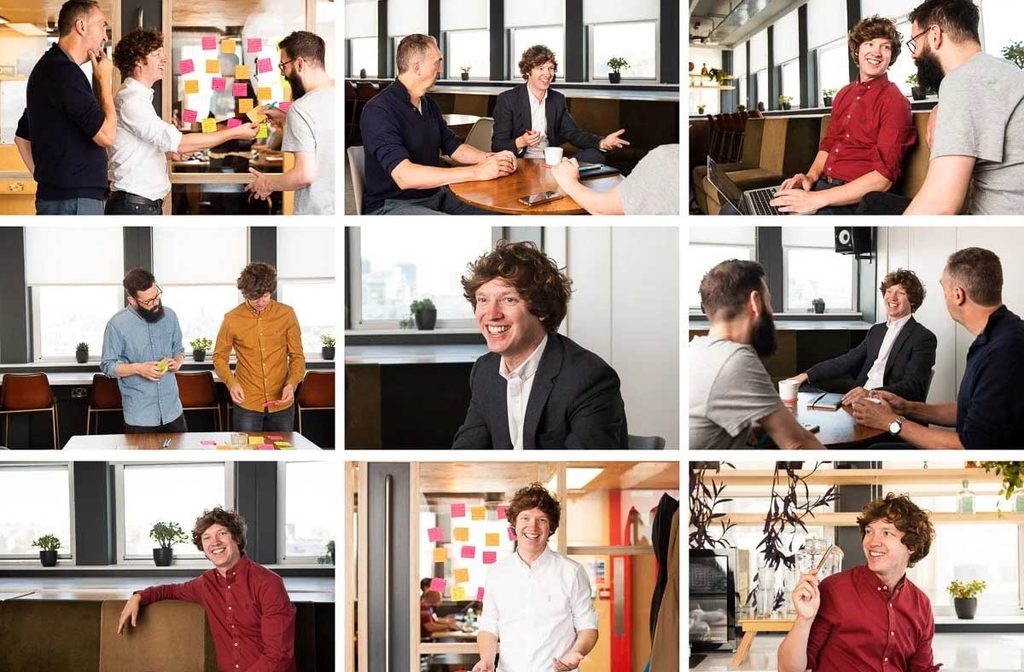
Professional images can build trust
Trust is particularly important when customers are deciding whether to contact a company they have never used before.
Stock photography can sometimes serve a purpose, but generic images can also make a business look interchangeable with competitors, whereas authentic photography lets customers see the real organisation.
That might include:
- The founder or leadership team
- Employees and workplace culture
- Products and services
- Offices, facilities or premises
- Behind-the-scenes processes
- Customers or completed projects
- People actually delivering the service
Showing the real people and environments behind a company can make a brand feel more transparent.
For an SME, this can be especially powerful. People often want to know who they are dealing with before making an enquiry.
Headshots are part of your brand
A professional headshot is not simply a photograph for a business card.
Your team may appear on LinkedIn, your website, proposals, presentations, press releases and industry publications. When employees have consistent, professionally produced portraits, the organisation can immediately appear more cohesive.
This is particularly relevant for professional services firms where the relationship between the client and the individual delivering the service is central to the buying decision.
A strong corporate portrait does not necessarily need to look stiff or overly formal. It is the lighting, background, expression, styling, and direction that are applied that can be adapted to reflect the personality of the organisation.
For businesses with several employees, consistency is often more important than creating an elaborate individual portrait for every person.
Show customers what you actually do
One of the most effective applications of commercial photography is demonstrating the work behind the business.
A company can tell prospective customers that it has experienced staff, high-quality facilities or sophisticated equipment. It is by showing those things can be more convincing.
For example, a manufacturer might photograph its production environment. An architectural practice can showcase completed projects. A restaurant can show its kitchen, dishes, and team. A professional services company can document its people and working environment.
These images provide evidence as they allow prospective customers to see the business rather than simply being told about it.
Photography supports content marketing
Modern brands need a steady supply of visual material.
A single website may require hero images, team portraits, service-page photography, case-study images and supporting graphics. Social media adds another layer of demand.
This creates an opportunity to plan photography strategically.
Instead of commissioning one isolated session every time an image is needed, a business can build a library of useful assets during a planned production.
A shoot could include:
Brand portraits: Images of founders, executives, and employees.
Workplace photography: The environment in which the business operates.
Service imagery: Visual representations of what customers actually receive.
Product photography: Consistent images suitable for websites, catalogues and ecommerce.
Social content: Additional vertical and horizontal assets for ongoing marketing.
Detail shots: Smaller visual elements that can support web pages, presentations and campaigns.
The result is a collection of assets that can continue working long after the shoot day.

Stronger imagery can improve engagement
People process visual information quickly, which matters when audiences are scrolling through social media, browsing a website or reviewing a company profile.
An engagingly well-taken photograph can encourage someone to stop and look rather than move on.
However, engagement should not be confused with simply making an image dramatic.
The strongest commercial imagery has a job to perform; it might introduce a person, demonstrate a service, establish credibility, explain a process, or create an emotional association with a product. The creative treatment should support that purpose.
Photography should reflect your visual identity
A common problem for growing companies is visual inconsistency.
One website page may feature polished professional portraits. Another uses dated stock photography. Social media might contain casual phone photographs alongside heavily edited promotional images.
Individually, these images may be perfectly acceptable. Together, they can create a fragmented impression. A considered visual approach helps bring those elements together.
This does not mean every photograph has to look identical. It means there should be a recognisable relationship between the lighting, composition, colour, backgrounds, subject matter, and overall tone.
Your imagery should feel like it belongs to the same brand.
Use photography to tell the story behind the company
Businesses are not just logos and products.
They are made up of people, decisions, processes, places and experiences.
This gives commercial photography an opportunity to tell a more complete story.
A founder portrait can communicate leadership.
A photograph of a team collaborating can communicate culture.
A photograph of a product being manufactured can communicate craftsmanship.
A customer using a service can communicate the experience.
A behind-the-scenes image can communicate authenticity.
Together, these photographs can create a much richer picture of the organisation than a collection of generic promotional images.
What makes a business photography session effective?
The best results usually begin before the camera comes out.
Start with the business objective.
Ask what the imagery needs to achieve and where it will be used. Identify the audiences you want to reach and the impression you want to create.
Then develop a shot list.
Consider the essential photographs first, followed by additional images that could provide value across future marketing campaigns.
It is also worth considering orientation. Website banners, LinkedIn posts, Instagram content, presentations and printed brochures may all require different compositions.
Planning these requirements in advance can make the production considerably more efficient.
Real examples matter
Experience is one of the most useful ways to evaluate a commercial photographer.
Look beyond a handful of impressive images and examine whether the photographer has experience producing the type of work your organisation requires.
Client case studies can reveal how a project was approached, what the business needed, and how the final imagery was used. This is very useful and can also provide a more realistic indication of consistency than a portfolio containing only individual hero images.
For SMEs, this can be the perfect starting point when choosing between different providers.
Photography is an investment in how your business is perceived
Good photography cannot fix a poor product or weak customer experience.
What it can do is make the quality that already exists within a business easier to see.
When your people, products, facilities and work are represented accurately and professionally, your marketing has stronger material to work with.
That can influence the first impression created by your website, strengthen your social presence and give sales and marketing teams a reusable library of credible visual assets.
The objective is not to have photographs simply because businesses are expected to have visual content.
The objective is to make your imagery work harder.
Ready to strengthen your brand visually?
Start by identifying where your current imagery is working and where it is letting the business down.
Are your team photographs consistent? Do your website images accurately represent what you offer? Do you have enough original content for your social channels? Can a prospective customer understand what your business actually does from the imagery alone?
If the answer to several of these questions is no, a planned photography session could be worthwhile.
When the visual side of your brand is planned properly, the professional captured photography becomes more than an asset. It becomes part of the way your business communicates.
Q&A: Business Photography and Brand Building
What is business photography used for?
Business photography can be used for websites, social media, LinkedIn profiles, advertising, brochures, presentations, case studies, press material, ecommerce and internal communications. The most effective approach is to create imagery around specific business and marketing objectives.
How does professional photography strengthen a brand?
It can create greater consistency, communicate professionalism and provide authentic visual evidence of the people, products, services and environments behind a company. Over time, consistent imagery can also contribute to a recognisable visual identity.
Why is authentic photography better than relying entirely on stock images?
Stock imagery can be useful, but it does not show the actual people, products or environment behind your organisation. Original photographs can provide more relevant and credible visual information, particularly when trust is an important part of the buying decision.
Do SMEs really need professional photography?
Not every business needs the same level of production. However, SMEs can benefit from professional imagery when their website, sales material or social presence needs to communicate credibility and differentiate the company from competitors.
What photographs should a business consider commissioning?
A useful collection could include leadership portraits, employee headshots, workplace imagery, products, services, customer-facing activities, facilities, processes and behind-the-scenes photographs. The exact mix should depend on how the business markets itself.
How often should a company update its photographs?
There is no universal schedule. Images should be updated when the business changes significantly, when team members change, when products or premises change, or when the existing visual material no longer represents the organisation accurately.
Can one photography session create content for social media?
Yes. With proper planning, one production can generate a range of photographs and supporting visual content. Different compositions, orientations and situations can provide material for websites, LinkedIn, social platforms and future campaigns.
What should businesses prepare before a shoot?
A clear brief, intended uses, priority images, brand guidelines, people who need to be photographed, relevant products or locations and a realistic shot list are useful starting points. Good preparation allows more of the available time to be spent creating rather than organising.
How do you choose the right commercial photographer?
Review relevant portfolios, look for experience with similar businesses and consider whether the photographer understands the commercial objective rather than simply producing attractive images. Case studies, testimonials and examples of complete projects can provide useful evidence of experience.
Can photography influence customer trust?
It can contribute to trust by providing authentic visual evidence of the organisation. Showing real people, premises, products, processes and completed work can make a business easier for prospective customers to understand and evaluate.
The Verdict
Your customers are already forming opinions about your business through what they see.
The question is whether your photography is helping you control that first impression.
Professional imagery gives businesses the opportunity to show who they are, what they do and why customers should take them seriously.
Used strategically, it becomes part of the brand itself.