
How Lighting Changes Everything in Professional Photography
Wed Aug 2026

Category:
A technically sharp photograph can still feel flat, lifeless or forgettable. Often, the difference is not the camera or lens. It is the light.
Lighting influences far more than whether a subject is visible. It shapes mood, reveals texture, controls contrast, directs attention and can even influence how a person perceives a brand. Whether you are photographing people, products, interiors or creating content for social media, understanding light gives you far more control over the final image.
This practical photography lighting guide looks at how light affects the way an image looks and feels, and how photographers can use it deliberately rather than simply reacting to whatever light happens to be available.
Why lighting matters so much
Photography is, quite literally, the process of recording light. The camera can only capture what reaches the sensor, so the quality, direction, intensity and colour of that light all influence the result.
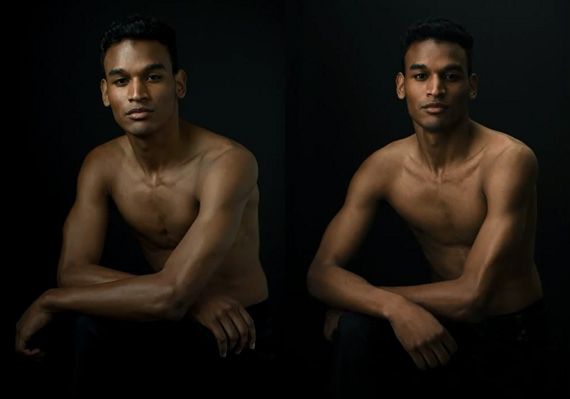
Consider two photographs of the same subject. One might use soft light from a large window, producing gentle shadows and a relaxed feeling. The other might use a small, hard light positioned to the side, creating deeper shadows and stronger definition. The subject has not changed. The lighting has.
That is why professional photographers do not simply ask, “Is there enough light?” They ask, “What is the light doing?”
Light controls mood
Light is one of the most effective ways to establish an emotional response.
Soft, diffused illumination tends to produce gentle transitions between highlights and shadows. It is often useful for portraits, beauty work, lifestyle imagery and brands that want to communicate warmth or approachability.
Harder, more directional illumination produces stronger contrast and more defined shadows. It can create drama, energy and a sense of sophistication, making it particularly effective for fashion, editorial and commercial work.
The direction is also important and will have an influence on the outcome.
Front lighting can reduce visible texture and create an even appearance, while side lighting emphasises shape, texture and contours, and backlighting can separate a subject from the background or create a more atmospheric image.
There is no universally “correct” approach. The best setup depends on what the image needs to communicate.
Exposure is only part of the equation
Exposure determines how light or dark the photograph appears, but good exposure does not automatically mean good lighting.
A correctly exposed image can still have distracting shadows, blown highlights or unflattering contrast.
This is where photographers need to think beyond the exposure meter.
For example, imagine a portrait where the face is correctly exposed but the background is several stops brighter. The subject may technically be exposed correctly, yet the bright area could pull attention away from the person.
Likewise, preserving every highlight and shadow is not always the objective. Sometimes deliberately allowing parts of an image to fall into shadow creates depth and atmosphere.
A simple lighting relationship
          LIGHT SOURCE
               ↓
        ┌─────────────┐
        │   SUBJECT   │
        └─────────────┘
          ↙         ↘
       SHADOW      CAMERA
Changing the position of the light changes the relationship between illumination, shadow and the camera’s viewpoint.
Understanding shadows
Shadows are not simply areas where there is “not enough light”. They are an important creative tool.
A shadow gives an object shape. Without some variation between light and dark, a face can appear flat and a product can lose its dimensionality.
The size and position of the light source have a major influence on shadow quality.
A large light source positioned relatively close to the subject generally produces softer transitions. A smaller source, or one positioned farther away, tends to produce harder, more defined shadows.
Reflectors and fill lights can then be used to reduce unwanted contrast without completely eliminating the shadow.
SOFT LIGHT

      [ LARGE SOURCE ]
             ↓
        ↘       ↙
          SUBJECT
        soft shadow


HARD LIGHT

       [ SMALL SOURCE ]
              →
          SUBJECT
              →
        defined shadow
The goal is not necessarily to remove shadows. It is to control them.
Highlights reveal form
Highlights are equally important.
A highlight can show the curve of a cheek, the surface of a bottle, or the texture of a piece of fabric. In product photography, carefully positioned reflections can communicate shape and material, however, highlights can also become problematic when they become too bright and lose detail.
This is particularly important with reflective surfaces, glass, jewellery and glossy products. The photographer is often controlling reflections as much as illumination.
Understanding the relationship between highlights and shadows therefore becomes essential when working commercially.
Studio lighting versus natural light
Both studio and natural light can produce excellent results. The major difference is control.
Natural light photography can be beautifully expressive because the environment becomes part of the lighting setup. Window direction, time of day, weather and surrounding surfaces all influence the result.
The challenge is consistency.
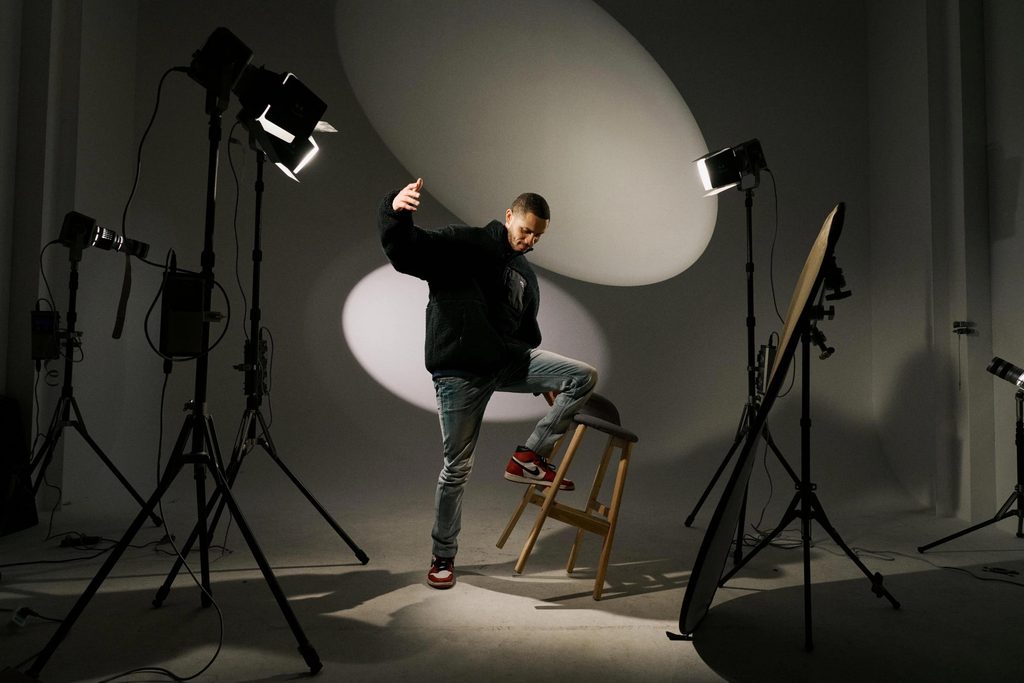
Studio lighting gives the photographer considerably more control over intensity, direction, colour and modifiers. A softbox, reflector, grid or other modifier can be positioned precisely to achieve a particular result.
That control is especially valuable when creating a series of images that need to look consistent, such as a corporate campaign, product catalogue or personal branding shoot.
A professional studio can also make experimentation easier because you can change the lighting without waiting for the sun, moving locations, or relying on unpredictable weather. For example, a dedicated photography studio provides a controlled space and professional lighting equipment for photography and video work.
Lighting and branding
Lighting can become part of a brand’s visual identity.
Think about the difference between a brightly lit corporate portrait with clean, even illumination and a dramatic portrait with deep shadows and directional light. Both can be technically excellent, but they communicate very different things.
A professional brand might favour clean, consistent lighting across its website and marketing material. A fashion brand may deliberately use contrast and unusual lighting to create a distinctive visual language.
Consistency matters because audiences begin to associate a particular visual treatment with a business.
This is why lighting decisions should ideally be made before the camera is picked up. Ask what the image needs to communicate, then build the lighting around that objective.
A practical approach to better lighting
Before taking the first photograph, consider five questions:
- What is the subject?
A person, product, space, or piece of content may require a completely different approach. - What mood do I want?
Bright and clean? Soft and welcoming? Dramatic and cinematic? - Where should the viewer look first?
Use brightness, contrast and direction to guide attention. - How much shadow is useful?
Shadows can add depth, but uncontrolled shadows can become distracting. - Is the lighting consistent with the brand?
A technically good photograph can still be wrong for the intended audience.
The more deliberately you answer these questions, the less you are relying on trial and error.
Lighting is a creative decision, not just a technical one
Learning exposure, shutter speed, aperture and ISO is essential, but technical knowledge is only the foundation.
The real progression comes when you understand how those settings interact with the light and, more importantly, why you are choosing a particular lighting approach.
Move the light. Change its height. Bring it closer. Diffuse it. Add a reflector. Remove the fill. Watch what happens to the shadows.
That experimentation is where lighting becomes intuitive.
For photographers wanting to explore the relationship between highlights, shadows, and controlled illumination, practical demonstrations can be particularly useful.
Master the Light, Elevate Your Photography
Great lighting does not necessarily mean complicated lighting.
One window, one reflector or one carefully positioned studio light can sometimes produce a stronger image than a collection of expensive equipment used without purpose.
The key is understanding what the light is doing and making deliberate choices.
When you control the light, you gain control over mood, shape, detail, exposure and ultimately the story your photograph tells.
Q&A: Photography Lighting Guide
What is the most important aspect of photography lighting?
The most important consideration is usually the quality, direction and intensity of the light in relation to the subject. Good lighting supports the intended mood, reveals useful detail and directs the viewer’s attention.
What is the difference between hard and soft light?
Hard light produces stronger, more defined shadows and higher contrast. Soft light creates gentler transitions between highlights and shadows and is often more forgiving for portraits.
Is natural light better than studio lighting?
Neither is inherently better. Natural light can produce beautiful, organic results, while studio lighting offers greater control and consistency. The better choice depends on the subject, location and desired result.
How does lighting affect mood in photography?
Brightness, contrast, colour, direction and shadow all influence how an image feels. Soft, even light can feel calm and approachable, while directional, high-contrast illumination can create drama and intensity.
Why are shadows important in photography?
Shadows provide depth, dimension and texture. Rather than trying to eliminate every shadow, professional photographers generally aim to control where shadows appear and how strongly they affect the image.
How does lighting affect a brand’s photography?
Consistent lighting can help establish a recognisable visual identity. Clean, even illumination may communicate professionalism and simplicity, while dramatic contrast can create a more editorial or premium appearance.
What is the easiest way to improve my lighting?
Start with one light source and learn how its position changes the subject. Move it closer, farther away, higher and lower, then observe the changes in shadow and contrast. Understanding one light well is more valuable than using several lights without understanding them.
Can professional photography be achieved with natural light?
Absolutely. Window light, open shade and directional sunlight can all produce professional results. The key is learning how to position the subject and control the available light rather than simply accepting whatever illumination is present.
Why should photographers learn lighting rather than rely on automatic settings?
Automatic exposure can help determine a usable exposure, but it cannot decide what the light should communicate. Understanding lighting gives the photographer creative control over mood, contrast, shape and visual consistency.