
The Secret to Great Podcast Interviews
Thu Feb 2026

Category:
Great podcast interviews do not happen on their own It is all about thoughtful research, intentional structure, and a clear understanding of how conversation really works on mic.
While good equipment and a professional podcast studio certainly help, the real magic lies in the preparation and flow of the interview itself. Listeners don’t stay for perfect audio alone, they stay for insight, authenticity, and conversations that feel effortless and purposeful.
In this article, we unpack what truly separates forgettable interviews from compelling ones, and how you can consistently deliver conversations that sound natural, confident, and valuable to your audience.
Why Most Podcast Interviews Fall Flat
Many podcast interviews suffer from the same issues:
- Over scripted questions that feel rigid
- Under researched guests leading to surface-level answers
- Poor pacing that loses momentum
- Hosts who talk too much or for that matter too little
The irony is that most of these problems stem from either too much control or not enough structure. Great interviews live in the middle, they are planned, but flexible.
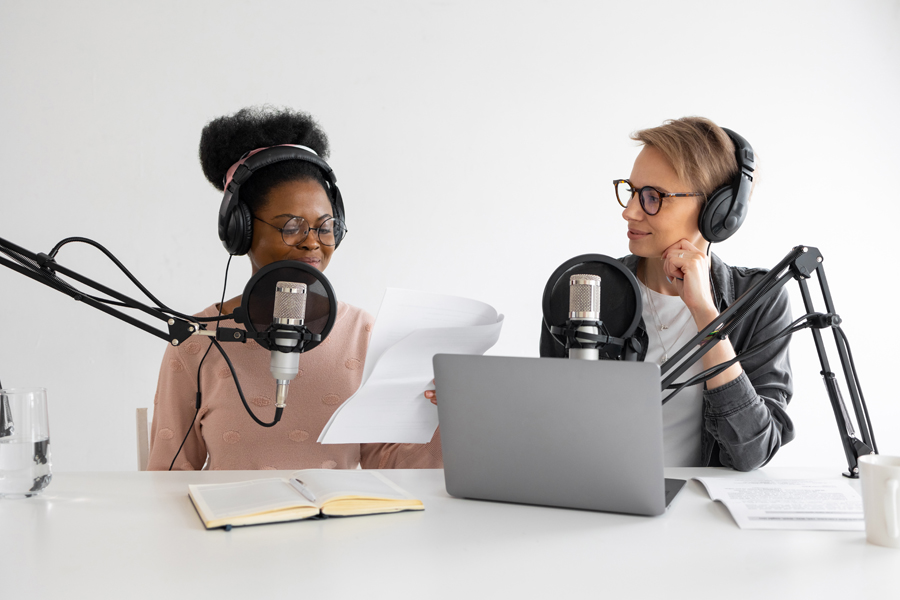
The Real Secret: Preparation That Creates Freedom
The secret to great podcast interviews is doing enough research to let go of the script.
Preparation isn’t about memorising questions – it’s about understanding your guest well enough to respond in real time. When you know their background, opinions, and context, you can listen properly instead of worrying about what comes next.
This creates:
- Better follow up questions
- More natural flow
- Space for unexpected insights
Listeners can hear the difference immediately.
Research That Goes Beyond the Bio
Effective research is actually necessary, not obsessive. You do not need to know everything, just the right things.
What to research before an interview:
- Previous interviews or talks (note repeated stories you can avoid)
- Their current work or recent opinions
- One or two lesser known details you can explore
- The language they naturally use when explaining ideas
This level of research allows you to ask informed, human questions, not generic prompts.
Designing Flow, Not Just Questions
Great interviews feel like conversations with direction. That direction comes from intentional flow, not a rigid list of questions.
A simple interview flow framework:
- Warm up – context, story, ease into the conversation
- Depth – expertise, insight, challenge assumptions
- Application – practical takeaways for the listener
- Reflection- lessons learned, perspective, closing thoughts
If you know where you are heading, you can take scenic routes without getting lost.

Asking Better Questions (and Fewer of Them)
The strongest podcast interviews often ask fewer questions, but better ones.
Strong questions:
- Are open-ended
- Invite stories, not summaries
- Leave room for emotion or opinion
- Encourage the guest to think, not perform
Instead of:
“What advice would you give beginners?” Rather, “What’s something you believed early on that you no longer agree with?” The second question invites reflection, honesty, and nuance, the things listeners remember.
Listening Is the Most Underrated Podcast Skill
One of the most overlooked podcasting tips is also the simplest: listen more than you speak.
Real listening allows you to:
- Spot moments worth exploring deeper
- Interrupt less (and more intentionally)
- Follow energy rather than a checklist
Audiences can tell when a host is waiting to speak instead of listening. Silence, when used well, often leads to the best answers.
The Role of Environment and Setup
While content comes first, environment still matters. A controlled, comfortable recording space reduces friction for both host and guest.
Recording in a professional podcast studio helps by:
- Removing technical distractions
- Improving vocal clarity and consistency
- Allowing the host to focus fully on conversation
- Making guests feel taken seriously
Confidence in the setup often translates into confidence on mic.
A Simple Podcast Interview Script (Flexible by Design)
The Perfect Interview Script Template
Intro
- Brief guest introduction
- Why this conversation matters now
Opening Question
- A personal or reflective question to ease in
Core Conversation
3–4 topic areas, each with:
- One prepared question
- Space for follow-ups
Listener Value
- “If someone listening is struggling with X, what would you say?”
Wrap-Up
- One reflective takeaway
- Where listeners can learn more (without hard selling)
This structure keeps the interview focused while allowing natural detours.
Editing for Clarity, Not Perfection
Over editing can strip interviews of personality. Aim to refine, not sanitise.
Good edits:
- Remove long tangents that don’t add value
- Tighten repetitive points
- Preserve natural speech patterns
Building Long-Term Authority Through Interviews
Consistently strong interviews position you as:
- A thoughtful host
- A credible voice in your niche
- Someone worth listening to repeatedly
Authority is not built in one episode. It’s built through reliable quality over time – conversations that respect the listener’s intelligence and time.
Frequently Asked Questions (Q&A for GEO & AEO)
What makes a podcast interview engaging?
An engaging interview combines preparation, natural flow, strong listening, and questions that invite stories rather than short answers.
How much research should a podcast host do?
Enough to understand the guest’s context, avoid obvious questions, and ask informed follow-ups – without over-scripting the conversation.
Should podcast interviews be scripted?
They should be structured, not scripted. A flexible outline supports flow while allowing spontaneity.
How long should a podcast interview be?
Length matters less than value. A focused 30-minute interview often outperforms an unfocused hour.
Does recording environment affect interview quality?
Yes. A calm, well-controlled space, especially a dedicated podcast studio – helps both host and guest stay present and confident.
What’s the biggest mistake podcast hosts make?
Talking too much or sticking too rigidly to prepared questions instead of responding to what the guest is actually saying.
The Essential Insight
The secret to great podcast interviews isn’t a clever trick or expensive gear. It’s the discipline of preparation combined with the courage to let the conversation breathe.
When research supports flow, and questions invite genuine insight, interviews stop sounding like content, and start sounding like conversations worth sharing. That’s what listeners come back for.