
Turning Your Podcast into Video Content
Thu Jan 2026

Category:
Why Video Podcasting Is No Longer Optional
Podcasting has evolved. What was once an audio-only medium is now firmly established as a visual-first content format. Today, audiences expect to see podcasts as much as they listen to them. Platforms like YouTube, Spotify, and social media feeds have made video podcasting one of the most effective ways to grow reach, increase engagement, and build authority.
Turning your podcast into video content is not about chasing trends. It is about meeting your audience where they already are and maximising the value of content… You are already creating. With the right setup, workflow, and strategy, one podcast recording can fuel weeks of multi-platform content.
This article explains how video podcasting works, why it matters, and how to do it professionally while remaining accessible to independent creators, brands, and businesses.
What Is Video Podcasting?
Video podcasting is the process of recording your podcast with cameras as well as microphones, then distributing the episode as video content across platforms such as YouTube, Spotify Video, and social media.
Unlike traditional podcasts, video podcasts:
- Build stronger audience connection through facial cues and body language
- Perform better on visual-first platforms
- Offer more opportunities for short-form clips and marketing
- Increase discoverability through video search engines
For brands and professionals, video adds credibility and visibility, the two critical trust signals in today’s content landscape.
Why YouTube Is Central to Podcast Growth
While podcasts live on audio platforms, YouTube is often the largest discovery engine for video podcasts. It functions as both a search engine and a recommendation platform.
Benefits of publishing your podcast on YouTube include:
- Long-term discoverability through search
- Suggested video traffic over time
- Built-in analytics and audience insights
- Easy repurposing into clips and shorts
Importantly, YouTube rewards consistency and watch time, both of which video podcasts naturally support.

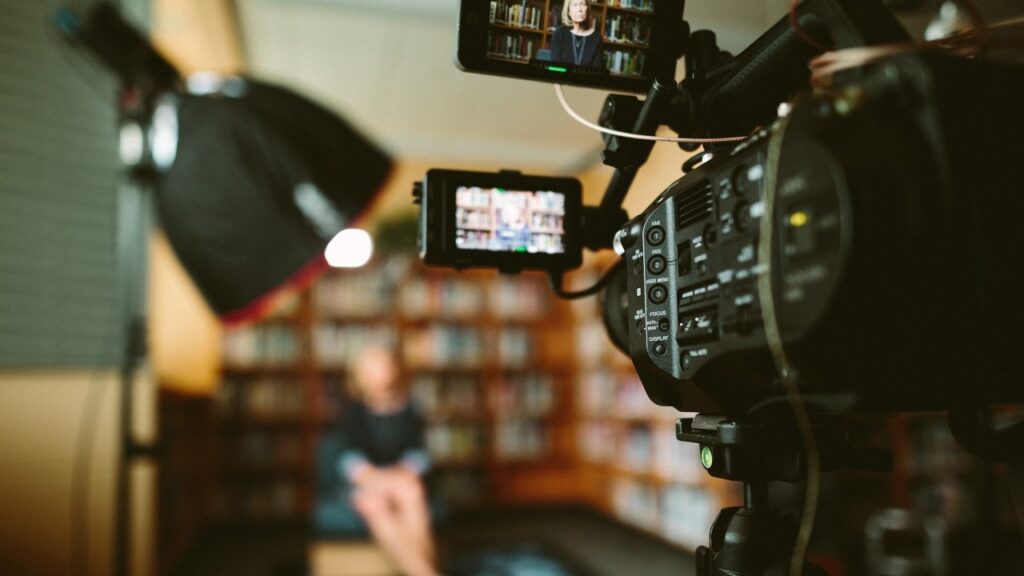
Multicam Setups: Elevating Production Value
A single static camera can work, but multicam setups significantly improve viewer retention. Switching angles keeps the visual experience dynamic without distracting from the conversation.
Common multicam configurations include:
- One wide shot covering all speakers
- Individual close-ups for hosts or guests
- Over-the-shoulder or side angles for depth
Professional multicam setups are synchronised in post-production, allowing seamless switching between speakers. The result feels intentional, and broadcast-ready.
Lighting: The Difference Between Amateur and Professional
Lighting is one of the most underestimated elements of video podcasting. Poor lighting instantly signals low quality regardless of how good the conversation is.
Effective podcast lighting should:
- Evenly illuminate faces without harsh shadows
- Separate subjects from the background
- Remain consistent throughout the recording
Controlled studio lighting creates a clean, repeatable look that reinforces professionalism. Even minimal lighting setups, when used correctly, dramatically improve visual quality.
Audio Still Comes First
While video adds reach, audio quality remains non-negotiable. A great looking podcast with poor sound will not retain listeners.
Professional video podcasts prioritise:
- Dedicated microphones for each speaker
- Acoustic treatment to reduce echo
- Clean, balanced audio mixes
The goal is simple: audio that works equally well for listeners who never watch the video.
Turning One Podcast into Multiple Content Assets
One of the biggest advantages of video podcasting is content efficiency. A single recording session can generate:
- Full-length video episodes
- Audio-only podcast feeds
- Short-form video clips for social media
- Quote graphics and teasers
- Promotional trailers
This approach allows creators and brands to stay visible without constantly creating new content from scratch.
Video Templates: Consistency at Scale
A professional video template is essential for scaling video podcast content. Templates ensure that every episode looks consistent, regardless of guest or topic.
A strong podcast video template typically includes:
- Intro and outro sequences
- Lower thirds for names and titles
- Branded colours and typography
- Frame-safe layouts for multiple platforms
Templates reduce editing time, improve brand recognition, and maintain visual standards across all episodes.
SEO, AEO, and GEO Benefits of Video Podcasts
Video podcasts support modern search behaviour better than audio alone.
From an SEO perspective:
- Video increases dwell time on pages
- YouTube titles and descriptions rank in Google
- Transcripts improve keyword relevance
From an AEO (Answer Engine Optimisation) standpoint:
- Spoken answers can be surfaced by AI tools
- Question-based segments improve snippet potential
For GEO (local relevance):
- Location-based keywords in descriptions
- Studio-based recordings build regional authority
Together, these factors make video podcasting a powerful visibility tool.
When to Use Professional Podcasting Services
As your podcast grows, production complexity increases. Multicam setups, lighting control, and efficient post-production require experience and infrastructure.
Professional podcasting services provide:
- Purpose-built recording studios
- Reliable multicam workflows
- Broadcast-quality audio and lighting
- Faster turnaround times
If you are looking to scale your podcast visually, explore our dedicated podcast offering on our podcast page.
Frequently Asked Questions: Video Podcasting
Do I need Video for my podcast?
If growth, visibility, and content repurposing matter to you, video podcasting offers clear advantages over audio-only formats.
Is video podcasting more expensive?
It can be, but the return on investment is higher due to increased reach and content output. Templates and professional workflows help control costs.
Can I start small?
Absolutely. Many successful video podcasts begin with simple setups and scale as the audience grows.
At the End of the Digital Day?
Turning your podcast into video content is one of the most effective ways to future-proof your show. With the right lighting, multicam setup, and visual consistency, video podcasting transforms conversations into long-term digital assets.
Whether you are launching a new podcast or evolving an existing one, video is no longer an add-on, it is a strategic advantage.