
Understanding Studio Flash vs Continuous Lighting
Thu Mar 2026

Category:
A Deep Dive into Lighting Technology for Studio Users
Lighting is the foundation of professional photography and video production. Whether you are shooting portraits, products, fashion, or video content, the type of studio lighting you use dramatically affects the final result.
Two main lighting systems dominate the modern studio environment, either studio flash (strobe lighting) and continuous lighting (often LED). Each serves a different purpose and understanding how they work will help you choose the right setup for your shoot.
In this guide, we will break down the technical differences, advantages, limitations, and best use cases for both lighting types so that photographers, videographers, and content creators can make informed decisions.
What is Studio Flash Lighting?
Studio flash lighting which is often called strobes, produces a powerful burst of light lasting only a fraction of a second. The light fires precisely when the camera shutter opens.
This technology has been the backbone of professional photography studios for decades because it offers extreme power, control, and image quality.
A typical strobe setup includes:
- A flash head
- A power pack or built-in power supply
- A wireless trigger or sync cable
- Light modifiers (soft boxes, umbrellas, reflectors)
The flash is triggered when the camera shutter fires, creating a burst of light strong enough to illuminate subjects even at lower ISO settings.
Key Technical Feature: Sync Speed
When working with strobes, photographers must understand sync speed.
Sync speed is the maximum shutter speed at which your camera can synchronise with the flash. For most cameras this ranges between:
1/160 – 1/250 second
If you shoot faster than this without high-speed sync, part of your frame may appear dark due to the shutter curtains blocking the flash burst.
Understanding sync speed is essential when balancing flash with ambient light.
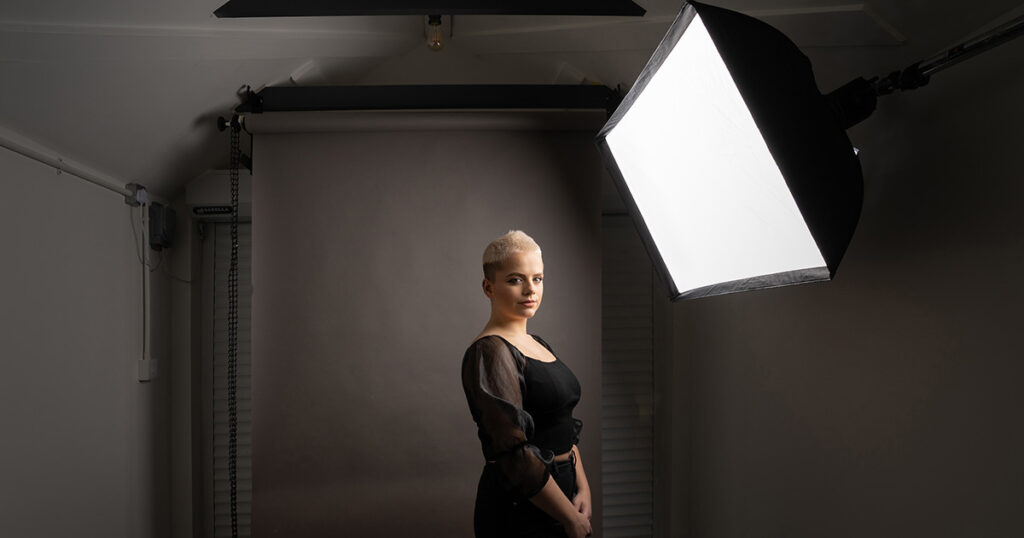
Advantages of Studio Flash
1.Very Powerful
Strobes produce far more light than continuous lighting. This allows photographers to:
- Shoot at low ISO
- Use smaller apertures (f/8 – f/16) for sharper images
- Freeze motion
This is particularly useful for:
- Fashion photography
- Product photography
- Group portraits
- Commercial shoots
2. Motion Freezing
Because a strobe burst lasts only 1/1000 – 1/10,000 second, it can freeze fast movement better than most shutter speeds.
This is why flash is often used in:
- Dance photography
- Splash product shots
- Action portraiture
3. Cooler Working Environment
Even though flash units are powerful, they only emit light briefly. This means:
- Less heat build-up
- More comfortable shoots
- Longer sessions without overheating equipment
4. Efficient Power Use
Strobes only use significant power when they fire, making them more efficient during longer shoots.
Limitations of Flash Lighting
Despite their power, strobes also present some challenges.
1. What You See Is Not What You Get
Because strobes only fire when the photo is taken, you cannot see the exact lighting effect in real time.
Most flash heads include a modelling lamp, but it is only an approximation of the final light.
This requires photographers to develop lighting intuition and experience.
2. Learning Curve
Understanding flash exposure involves balancing:
- Flash power
- Aperture
- ISO
- Distance to subject
- Light modifiers
Beginners often find this technical process intimidating at first.
3. Less Ideal for Video
Because flash fires in bursts rather than continuously, it cannot be used for video production.

What is Continuous Lighting?
Continuous lighting does exactly what the name suggests: it stays on continuously so that you can see the lighting effect with your eyes.
Traditionally, continuous lights were tungsten or fluorescent, but modern studios now rely heavily on LED lighting systems.
LED technology has transformed the studio industry because it offers:
- High brightness
- Low heat
- Adjustable colour temperature
- Energy efficiency
Continuous lighting is widely used by:
- Videographers
- Content creators
- YouTubers
- Hybrid photo/video shooters
Advantages of Continuous Lighting
1. Real-Time Lighting Control
One of the biggest advantages of continuous lighting is instant visual feedback.
You can see exactly how the light falls on your subject before you take the photo.
This makes it easier for beginners to understand lighting direction, shadow control, and modifier effects.
2. Perfect for Video Production
Video cameras require constant light, making LED panels and COB lights the standard for filmmaking and content production.
They are ideal for:
- Interviews
- Podcasts
- YouTube content
- Commercial video shoots
3. Simpler Learning Curve
Continuous lights make exposure easier because what you see in the camera preview is usually very close to the final image.
This makes them popular in photography workshops and beginner training.
4. Hybrid Shoots
Many studios today run hybrid shoots where video and stills are captured in the same session.
Continuous lights allow both mediums to be produced simultaneously.
Limitations of Continuous Lighting
Despite the advantages, continuous lighting also has limitations.
1. Lower Light Output
Even powerful LED systems generally produce less light than strobes.
This means photographers may need to:
- Increase ISO
- Use wider apertures
- Accept slower shutter speeds
This can reduce image sharpness or introduce noise.
2. Motion Blur
Because continuous light relies on shutter speed rather than flash duration to freeze motion, fast-moving subjects may blur.
3. Heat (with Some Systems)
Although LED lights are efficient, high-power units can still generate noticeable heat during long shoots.
When to Use Flash vs Continuous
Choosing between flash and continuous lighting depends on the type of work you’re doing.
Flash Is Ideal For
- Professional portraits
- Fashion photography
- Product photography
- Advertising shoots
- Large groups
- Motion freezing
Continuous Lighting Is Ideal For
- Video production
- Interviews
- Tutorials
- YouTube content
- Beginner lighting practice
- Hybrid shoots
Many professional studios actually use both systems together, depending on the needs of the production.
Modern Studios Use Both Lighting Systems
Today’s professional studios rarely limit themselves to a single lighting type.
A typical modern studio setup may include:
- High-powered strobe lighting systems
- Adjustable LED continuous lights
- Softboxes, grids, and modifiers
- Wireless triggers and control systems
This flexibility allows photographers and filmmakers to adapt quickly to different types of shoots.
For example:
- Portrait shoot – strobes
- Product video – LED
- Hybrid campaign – combination of both
Choosing the Right Lighting for Your Shoot
If you are planning a studio shoot, consider the following questions:
- Are you shooting photo, video, or both?
- Do you need to freeze movement?
- How large is your subject or group?
- Do you need real-time lighting control?
- What level of experience do you have with flash?
Answering these questions will help determine whether flash or continuous lighting will give you the best results.
Professional Lighting Without the Cost
High-quality lighting equipment can be expensive, which is why many photographers prefer working in a fully equipped professional studio.
Using a studio environment provides access to:
- Professional strobes
- Modern LED lighting
- Light modifiers
- Controlled shooting environments
If you need access to professional gear for your next shoot, professional studios include lighting gear i their package rates.
Explore our professional studio rental options here:
/studio
Which Lighting Wins?
Both studio flash and continuous lighting play vital roles in modern photography and video production.
Flash remains the gold standard for high-quality still photography thanks to its power and ability to freeze motion. Continuous lighting, especially modern LED systems, has become essential for video production and hybrid content creation.
Understanding how these systems work allows photographers and creators to choose the right tool for the job which ultimately produces better images and more efficient shoots.
Whether you are shooting portraits, products, or video content, mastering lighting technology is one of the most valuable skills you can develop in the studio.